


Pakistan’s First Great Strategic Disillusionment
On 9 September 1965, Zulfikar Ali Bhutto spent 45 minutes with the American ambassador in Karachi. Indian troops had crossed the international border three days earlier. Pakistan had asked Washington to act on its defence assurances. The answer centred on the United Nations. Bhutto wanted to know what a special relationship was worth if, when it mattered, Pakistan was simply referred back to the same institution where Kashmir had remained unresolved for eighteen years.
The exchange captures a wound that battlefield accounts often leave out. Pakistan could possess American weapons, train with Western partners and accept the risks of Cold War cooperation, yet still discover that those partners would decide for themselves whether its war deserved their support.
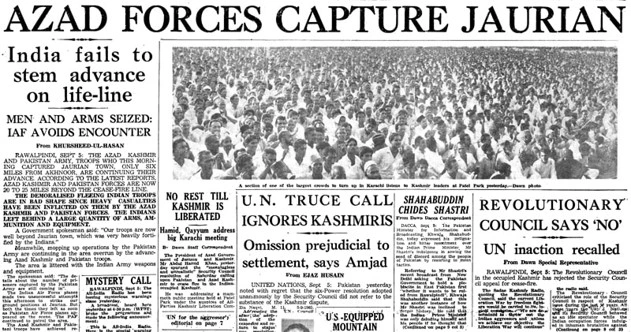
On 8 September, the United States publicly announced the suspension of military assistance shipments to India and Pakistan. Britain also stopped arms supplies to both during the conflict. The policy sounded even-handed. For Pakistan, whose military modernisation relied heavily on Western equipment, it carried a much heavier cost.
September became one of Pakistan’s defining experiences of disillusionment with the West. Calling it the first requires care. Western military assistance to India during the 1962 China war had already troubled Ayub Khan. What 1965 did was make the limits of partnership unmistakable while Pakistani forces were fighting. The immediate question was painfully practical. How long could the weapons already delivered remain effective if the supplies needed to sustain them stopped arriving?
What Pakistan expected from its partners
Pakistan’s Western partnerships grew out of an urgent search for security. The new state faced a stronger neighbour, an unresolved Kashmir dispute and the costs of building institutions after Partition. Western assistance offered a way to equip its forces more quickly than its own resources allowed. Pakistan joined SEATO in 1954 and the Baghdad Pact in 1955, which later became CENTO.
Washington approached these arrangements through the containment of communism. Pakistan approached them with India foremost in mind. American officials understood the difference. A 1959 policy paper acknowledged that fear of India’s military predominance helped motivate Pakistan’s participation. The two governments were cooperating while assigning different purposes to that cooperation.
Pakistan also provided something tangible. American intelligence activity from its territory exposed it to Soviet anger, dramatically illustrated by the U-2 aircraft shot down over the Soviet Union in May 1960 after taking off from Pakistan. It was reasonable for Pakistani leaders to ask what protection accompanied such exposure.
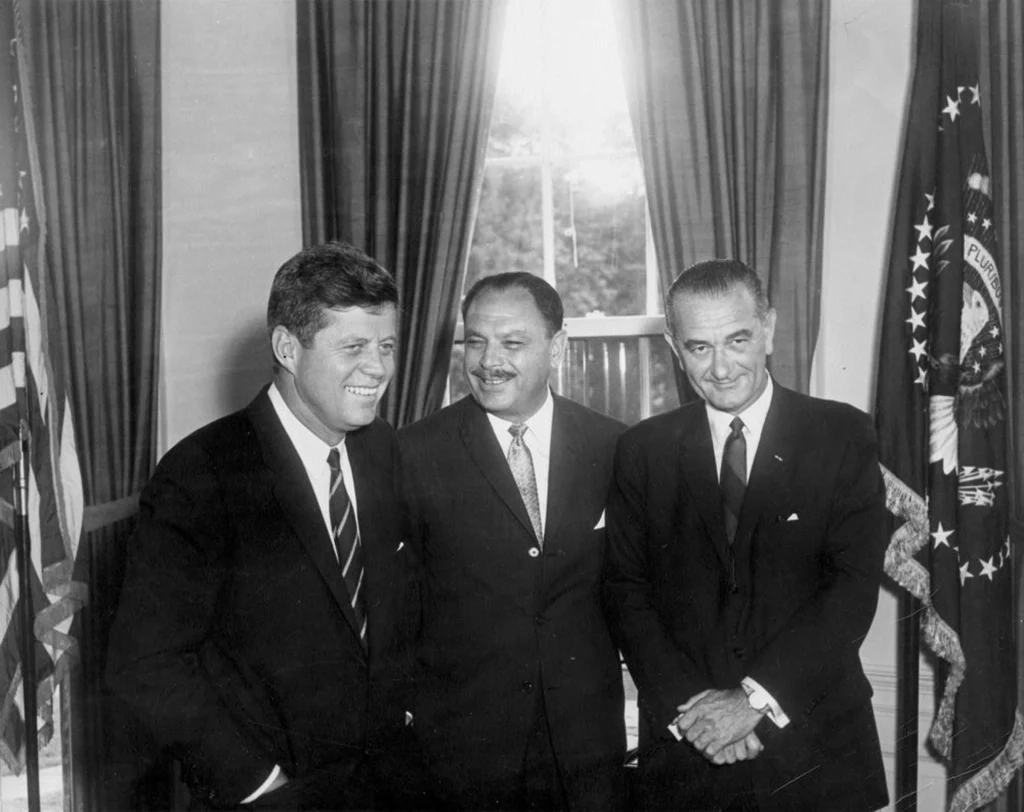
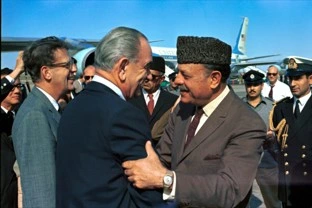
Their expectations rested on more than ceremonial photographs. On 5 November 1962, the American ambassador reaffirmed assistance in the event of Indian aggression against Pakistan and handed Ayub a written aide-memoire. This matters. Pakistan’s later grievance cannot be dismissed merely by observing that the Western pacts were principally directed against communist threats. Separate assurances about India existed. Their meaning became bitterly contested when the crisis arrived.
The embargo reached beyond the battlefield
Washington nevertheless refused to read the September fighting as an isolated Indian attack. Its instructions of 6 September placed India’s advance across the Punjab border within the preceding escalation in Kashmir, including infiltration from the Pakistani side. Pakistan’s Operation Gibraltar and the subsequent offensive in the Chhamb sector had helped create the crisis in which it now sought American protection.
That sequence does not erase Pakistan’s concern for its territorial security. It explains why Washington would not accept its case on Pakistan’s terms.
American domestic politics also mattered. On 7 September, presidential adviser Robert Komer recommended approval of the aid suspension announcement partly to protect the foreign assistance bill from hostile congressional amendments. Pakistan’s military needs were being weighed against a political problem in Washington. On 8 September, Secretary of State Dean Rusk reported intense congressional opposition to continued aid while the fighting lasted.
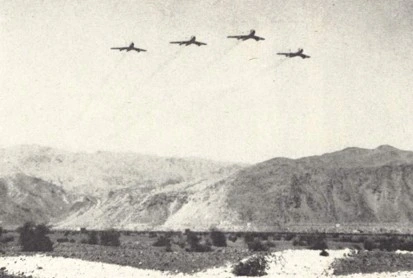
For Pakistan, the cost ran through the supply system behind every aircraft and armoured unit. Ammunition had to be replenished. Worn components needed replacement. A country could retain possession of a weapon while losing reliable access to the parts that kept it useful. On 10 September, Komer reported that Pakistan was already becoming anxious about ammunition shortages. This was a contemporary warning, not proof of a precise date on which its forces would have stopped fighting.
A December American intelligence estimate described Pakistan’s dependence on the United States for replacements and spare parts as nearly complete. It recorded cumulative American military aid deliveries of $676.7 million to Pakistan since 1954, against $92 million to India since 1963. These were aid totals over different periods, not measures of either country’s entire arsenal. They nevertheless show how much Pakistan’s modernisation had drawn on one supplier.
The older map behind the partnership
India also suffered from the interruption of Western supplies. But it possessed a broader industrial base and access to Soviet equipment. A later American policy review explicitly contrasted India’s domestic manufacture of rifles and ammunition with Pakistan’s continuing appetite for American military supplies. An identical restriction therefore operated on two unequal systems. The government most dependent on the supplier had the least room to absorb the shock.
The economic pressure extended beyond weapons. By December, American officials reported that the war had damaged business confidence and private investment in Pakistan. No new US economic aid commitments were being made, although assistance already in the pipeline continued. Food shipments also continued on short commitments. Describing the episode as a complete halt to every form of Western assistance would obscure the particular pressures Pakistan faced.
Why had Pakistan placed so much confidence in this relationship? Part of the answer lies before 1947. British officials had long treated the north-western approaches to India and Afghanistan as a zone in which Russian influence had to be contained. After the Bolshevik Revolution, fears of imperial expansion became entangled with fears of revolutionary politics. The frontier retained its importance even as the language used to explain it changed.
Olaf Caroe connects these periods. A senior official of British India and a former governor of the North-West Frontier Province, he carried older strategic concerns into arguments about the post-imperial defence of Asia. Historian Peter John Brobst’s study of Caroe shows how the Great Game survived the Raj in thinking about Asian borderlands and the Persian Gulf. Pakistan’s location fitted readily into this inherited view of the region.
That continuity should not be mistaken for a simple transfer of command from Britain to America. The East India Company had lost its governing role in 1858. The relevant twentieth-century transition was from the British Raj to a new distribution of power. Pakistani leaders made choices within it, seeking resources for their own security concerns. Colonial institutions and habits influenced those choices without making them inevitable.
Nor did the frontier behave like a passive barrier against Moscow. Afghanistan’s claims concerning Pashtun territories generated a dispute with Pakistan that complicated American containment plans. Elisabeth Leake’s research shows Washington struggling to reconcile cooperation with Pakistan and its wish to prevent Afghanistan moving closer to the Soviet Union. Here, too, Pakistan’s regional priorities and its partner’s wider calculations pulled in different directions.
An inheritance and a miscalculation
The ideological explanation also needs precision. Nehru’s preference for planning and India’s Soviet connections did not make non-alignment simple membership of the Soviet bloc. India accepted Western assistance as well. Congress’s diverse leadership cannot be adequately explained by assigning it a single caste ideology. For this story, the more revealing distinction is the freedom India retained to seek help from competing powers.
Relations between South Asian communists and the Muslim League were also more complicated than permanent opposition. Communist arguments in the 1940s included support for national self-determination and the possibility of separation in Muslim-majority areas. This does not establish a natural Soviet partnership for Pakistan. It does rule out an unbroken ideological divide as a sufficient explanation for the choices made after independence.
Pakistan’s westward turn combined inherited institutions, financial need and an effort to offset Indian power. The miscalculation was to assume that these arrangements would produce dependable support in the particular conflict Pakistan considered most important. The 1962 assurances encouraged that expectation.
Yet Washington retained control over how it interpreted aggression and what assistance it would provide. Pakistan had built military capacity faster than it had secured agreement over the circumstances in which that capacity would be sustained.
The ceasefire took effect on 23 September. The embargo’s consequences lasted much longer. Pakistan had already begun improving relations with China before the war. The crisis strengthened the incentive to diversify. Soviet mediation at Tashkent in January 1966 also demonstrated that diplomacy could cross the divisions of the Cold War, even without resolving Kashmir.
The supply restrictions subsequently changed. Washington permitted purchases of non-lethal equipment in February 1966 and cash purchases of spare parts for previously supplied weapons in April 1967. The original embargo should therefore not be imagined as a single unchanged prohibition lasting for years. But partial reopening could not restore the confidence that had preceded the war.
For Pakistan, remembering September honestly means making room for this experience alongside the courage of those who fought. Their ability to continue depended partly on decisions taken in distant capitals. Pakistan’s leaders had grounds to expect more from their partners. They also had a responsibility to reckon with what those partners might refuse. The enduring question left by the embargo was how much of the country’s defence could safely depend on an assurance whose practical meaning remained in somebody else’s hands.