
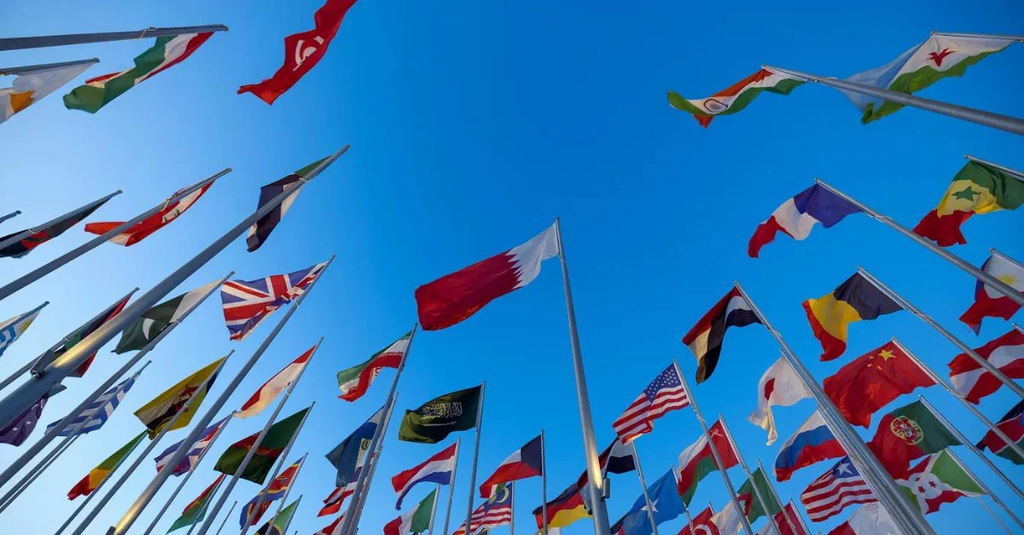

It takes a soldier a week to win a war. A song wins a generation in a decade. Guns decide who controls the ground. Afterwards, who owns the story is a matter of culture. Most governments understand the first kind of power, but few have learned to wield the second. The Brand Finance Global Soft Power Index 2025 polled over 170,000 people in more than 100 countries, and its numbers tell a quiet story of widening distance. Strong countries are pulling further ahead, while weak countries are falling further behind. Soft power is a rewarder of states that invest in it regularly, and a punisher of those that believe it lasts on its own.
Hollywood became synonymous with America. Somewhere on the other side of the world, a person watches The Godfather and forms an idea of America before an American embassy ever opens in their city. Levi’s jeans, jazz records, products from Silicon Valley travel; without needing a visa. The United States is number one on the 2025 index with a score of 79.5 out of 100 and is ranked in the top three in 12 of 35 national brand attributes. Washington’s political fortunes have seen their share of bumps and bruises lately, but its cultural influence hasn’t shifted. This is the lesson underneath the whole story that culture outlasts politics. Governments fall in and out of favor, but the films, the music, and the brands stay in people’s minds long after the news cycle moves on.
China watched this lesson and copied the method. For the first time in six years of the Brand Finance index, China has passed the United Kingdom in the 2025 rankings. This is the outcome of years of efforts in its economic image, cultural exports, and its reputation in an international arena. Confucius Institutes were established in Africa, Asia, and Latin America. A Chinese-language media network spread across continents. Learning Chinese became a beneficial hobby. The Belt and Road Initiative got a new script, told now as a development story instead of a financing deal. Chinese period dramas now stream into households from Lagos to Manila, doing quietly what a decade of diplomacy could not.
Now imagine a smaller nation without any colonial past and a middle-sized economy, who stake their national prestige on music videos and television dramas. This is South Korea’s story, and it worked quite well. K-pop and K-dramas crossed borders, and hearts, that Korean diplomacy alone never reached. Korean films picked up awards and audiences far from home. The country became the fastest riser among the top 100 nations in the index, jumping three places to 12th overall and climbing to 6th in six of the eight measured categories. The Korea Foundation funded it, with Korean Cultural Centers opened around the world to support it. Government officials helped arrange appearances for Korean artists at the United Nations.
India learned the same lesson early and built its own version. Today, Bollywood movies are showing in Asia, Africa and Latin America. Prime Minister Modi pushed the United Nations to name June 21 as International Yoga Day, a small gesture with real branding value. India also has a huge soft power network in its expatriate community, more than 3.5 crore spread across the world, providing a built-in network for the government to seek friendly ground where its formal diplomatic presence is limited. Critics claim India’s advertisement does not always correspond with its inner condition. The argument is fair; but the machinery doing the projecting is real, funded, and running every day.
Then the story turns to Pakistan, and the tone changes. Pakistan is ranked 88th on the Global Soft Power Index, and in the minds of most of the world, the country is a security story first and a cultural one a distant second. The assets exist, largely untouched. Pakistan is privileged to have five peaks in the world that are above 8000 meters. Classical ragas and Sufi qawwali have been passed down for generations. It has ancient Buddhist and Sikh heritage sites drawing pilgrims from across Asia. It has Coke Studio, a music platform which already has a fan following across the world before the government officials have recognized the diplomatic value of it. And yet in 2024, inbound tourism brought in $1.15 billion while Pakistanis spent $2.4 billion traveling abroad. The country spends more sending its own citizens out than it earns bringing the world in.
The diaspora tells a similar story of an asset left on the table. In 2024, Pakistanis living abroad sent home an unprecedented $34.6 billion, about eight percent of GDP and a jump of thirty-one percent from the year before. This is a diaspora that reaches across the Gulf, the UK, the US, and Europe. It brings cultural familiarity and economic heft to areas where Pakistan does not have an official presence. But no state-level diplomacy program organizes it. Neither lobbying strategy channels it, nor narrative management system points it in a shared direction. South Korea turned BTS into a diplomatic tool. We have never done the same with any asset that we already own.
The cost of sitting out this game shows up in specific, countable ways. Pakistan’s voice goes missing at international forums. Critics get to define the narrative around Balochistan while we stay quiet. India’s version of the events of May 2025 reaches international audiences faster than Pakistan’s response does. None of this happens because Pakistan’s version of events is false, but it happens because nobody is telling it fast enough or loud enough. Countries falling behind in soft power lose the information war by default. The world hears the other side first and moves on before the truth catches up.
Pakistan needs a real public diplomacy budget, not an afterthought line item. It needs tourism infrastructure built to turn a viral video into an actual visit. It needs its diaspora treated as a coordinated cultural strategy instead of a background resource nobody manages. Soft power is a war no country formally declares, and it is the war most countries fight badly. We are standing at the edge of losing this one without ever stepping onto the field.