

Every civilization that has ever mattered has a body count attached to its glory, and every civilization except one seems comfortable admitting it. The Romans built roads over conquered tribes and nobody asks Italians to disown the Colosseum. The British ran an empire on which the sun never set, and museums in London still charge admission to see what was taken from colonized nations. Americans name aircraft carriers after generals who fought wars of expansion, and nobody in Washington loses sleep over it. Then there is the Muslim world, sitting on thirteen centuries of military, intellectual, and political dominance, and increasingly unable to talk about the military part without flinching.
That flinch is worth examining, because it is not really about history. It is about what people think history is allowed to mean.
Power Wrote Most of the Record
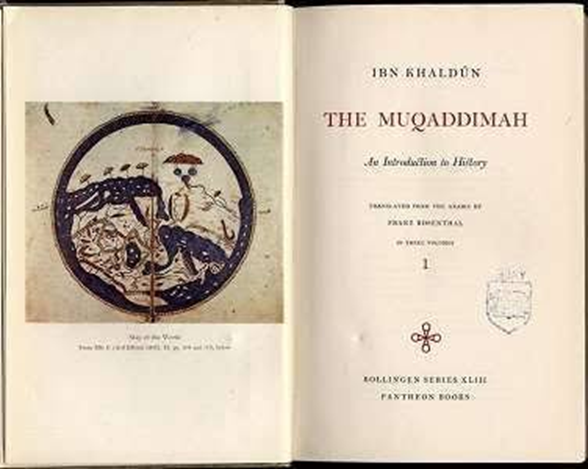
Ibn Khaldun, writing in the Muqaddimah in the fourteenth century, built an entire theory of civilization on a blunt premise that groups rise through cohesion and the willingness to assert themselves, and they decline once comfort replaces that cohesion.
He also made an observation that nations who kept subdued for too long, he argued, absorbs the psychology of the subdued. It becomes evasive rather than direct, and it learns to survive by accommodation rather than by standing on what they believe.
Whether or not you accept his cyclical model of history wholesale, the underlying claim is hard to dismiss looking at the last two centuries of Muslim intellectual life. A civilization that once produced conquerors, jurists, and astronomers with equal confidence now frequently produces apologetics, careful, defensive explanations for why its own past shouldn’t be held against it.
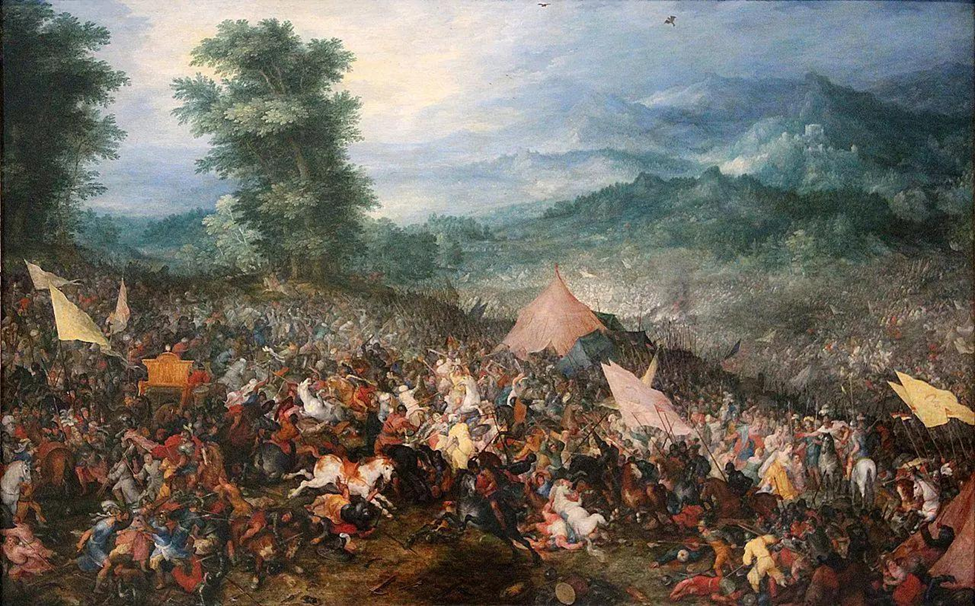
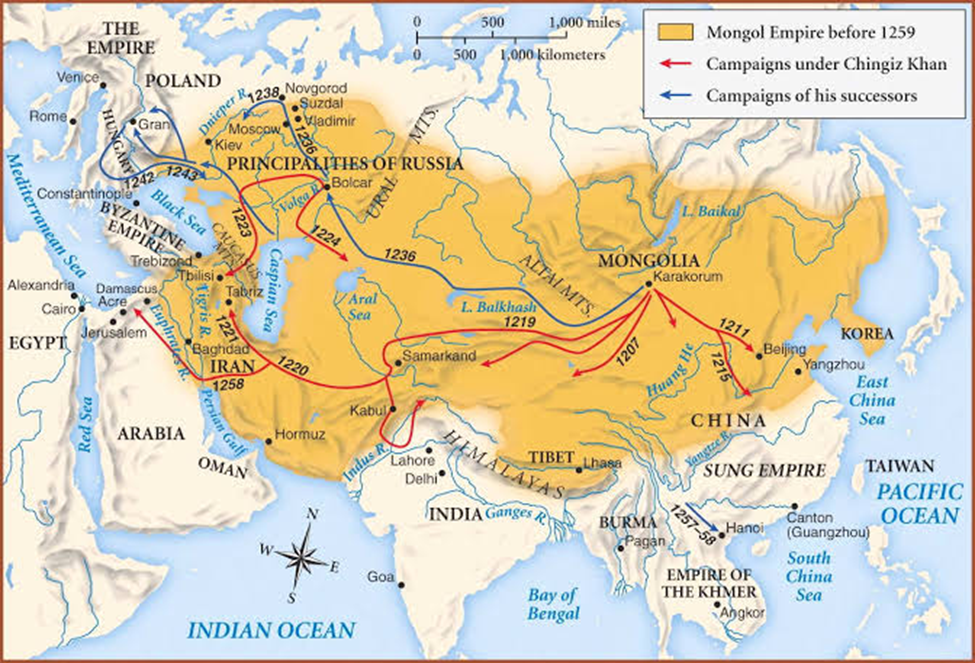
Compare that to how conquest is handled everywhere else. Alexander burned Persepolis and razed cities across Persia, and his soldiers are recorded by ancient historians as having pillaged extensively during the campaign. He is still taught in Muslim and Western classrooms alike as “the Great.” Genghis Khan’s campaigns killed a significant fraction of the population of thirteenth-century Eurasia by some estimates.
He remains a national icon in Mongolia and a fixture of admiring documentaries everywhere else. Nobody demands the Chinese government apologize for two thousand years of dynastic expansion before internationals will do business with it. Conquest, in other words, is not disqualifying for a civilization’s self-regard. It never has been. The question is why Islamic history gets treated as the exception.
A Double Standard in How Scripture Gets Read
Part of the answer lies in how selectively the comparison gets made. Critics who describe Muhammad PBUH as “a Prophet of war,” implying that this sets Islam apart from a gentler Judeo-Christian tradition, are working from a very thin reading of their own scripture. The book of Joshua describes the destruction of Jericho and Ai (“heap of ruins” in Hebrew).
The book of Numbers describes a war against Midian in which the Israelite commanders are instructed, after the battle, to kill male children and any woman who is not a virgin. The story of Dinah in Genesis ends with her brothers massacring the men of an entire town in retaliation for her assault. These are not obscure texts rather these sit at the center of the Hebrew Bible’s account of how Israel came into being as a people with land.
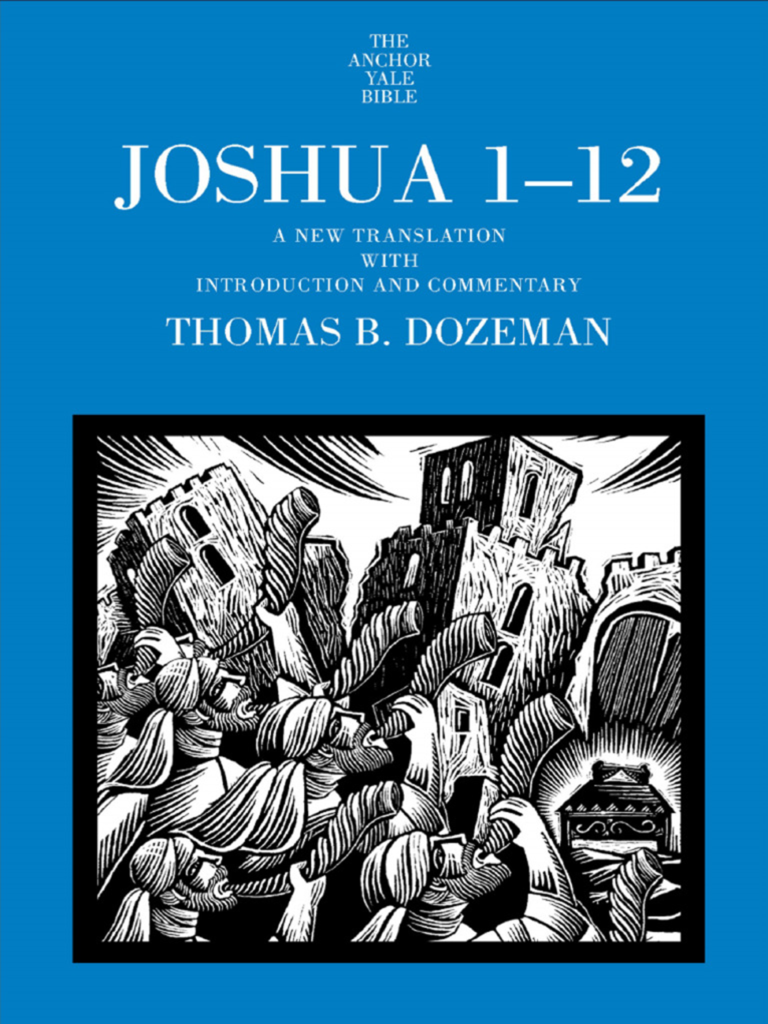
It is worth adding an honest caveat here, because a persuasive argument should not lean on selective reading any more than the criticism it is answering does. Modern biblical archaeology has complicated the historicity of the conquest narratives in Joshua specifically.
Excavations at Jericho and other sites have produced evidence that is difficult to square with a swift, total military campaign as described in the text, and a substantial school of scholars now favors a slower, more gradual model of Israelite emergence in Canaan rather than a single decisive conquest. That does not erase the warfare in the biblical text. It does mean the honest version of this argument is “the tradition remembers and records conquest as central to its founding story,” not “here is a verified body count.”
The New Testament complicates the picture further rather than resolving it. Jesus is not recorded leading armies, which is true and worth taking seriously rather than waving away. But the same gospel that records the Sermon on the Mount also records, in Matthew 10:34 Jesus saying he came “not to bring peace, but a sword,” and the Book of Revelation depicts a returning Christ who arrives with an army and a sword to strike down nations. Reading only the parts that support a “peaceful founder” narrative and skipping the parts that complicate it is not comparative religion but in modern terms it is public relations.
Getting the Timeline Right
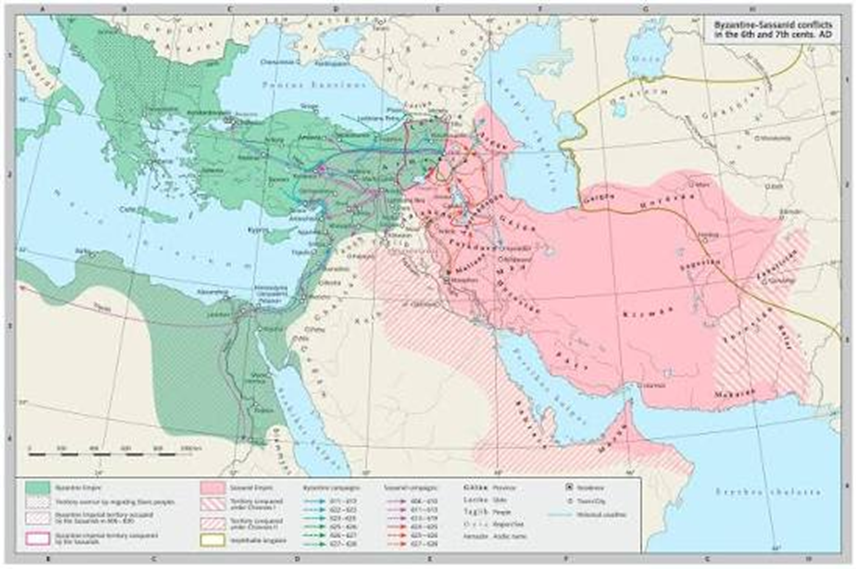
The campaigns that broke Byzantine control of the Levant and Egypt and dismantled the Sassanid empire almost entirely, across roughly two decades, under the first four Caliphs. What made that expansion possible was partly internal cohesion among the new Muslim polity. That is a more accurate story, and arguably a more impressive one, because it credits strategic timing and institutional cohesion rather than a single individual’s military campaign targeted at Prophet Muhammad PBUH.
What does belong to Muhammad’s own lifetime, and is well documented in the earliest Islamic biographical sources, is the pattern of clemency that followed victory. After the conquest of Mecca in 630 CE, a city whose leaders had exiled, boycotted, and fought his followers for nearly two decades, Muhammad issued a general amnesty.
Tradition records his companions’ expecting reprisals against the city that had persecuted them, and instead getting a blanket pardon. A similar pattern is recorded for Umar’s entry into Jerusalem in 637, where tradition holds, he personally guaranteed the safety of the city’s churches and Christian population rather than the mass destruction that had characterized earlier conquests of the same city by other powers.
Whether every detail of these accounts has survived transmission perfectly is a fair question for historians. The pattern itself, restraint at the point of maximum power, is what the tradition chose to preserve and repeat, and that choice tells you what the tradition valued.
Strength That Chooses Not to Strike
There is a real theological point buried in the popular claim, often attributed loosely to Jordan Peterson, that the biblical phrase “the meek shall inherit the earth” has been misread as praise for weakness. It is worth being precise about what is solid here and what is not. The Greek word in Matthew’s gospel, ” praus,” is better translated as “gentle” or “mild” than “weak,” and a number of biblical commentators, well before Peterson popularized the point in lectures, have described it using the image of a powerful animal, like a warhorse, that has been trained to submit its strength to control.
The claim that the original Hebrew or Aramaic term specifically meant “armed but restrained” is a much shakier piece of etymology and should be treated as an interpretive flourish rather than an established linguistic fact.
The underlying idea survives the correction, though, a scripture built around a founder who never held power and was never in a position to retaliate cannot really test the virtue of forgiveness, because forgiveness only means something when the alternative was available and refused. A person with no army forgiving is a default. A person who has won twenty-six battles, per the traditional count of Muhammad’s PBUH military engagements, and still chooses amnesty is making a decision.
Testing the “Colonized Mind” Explanations
So why the modern reluctance to say any of this plainly? The most common explanation inside contemporary Muslim discourse is that centuries of colonial rule left an internalized shame, a habit of pre-apologizing for one’s own tradition before a Western audience has even objected. There is real substance to this.
Educational systems across much of the Muslim world were built or heavily shaped by colonial administrations that had every institutional incentive to teach their own conquests as civilizing missions and Islamic conquests as barbarism. That asymmetry did not disappear when the colonial administrators left but it got absorbed into curricula, and from curricula into the instincts of people who never studied under a colonial government directly.
But that explanation should not be allowed to do all the work, because at least two other things are happening at the same time and deserve honest weight. The first is a genuine ethical reassessment that has nothing to do with insecurity and modern moral consensus has shifted on slavery, forced conversion, and the treatment of civilians in war in ways that make people, Muslim and otherwise, want to distinguish between admiring a historical achievement and endorsing every method used to achieve it.
That distinction, admiring the strategist without endorsing the atrocity, is exactly the move people make with Alexander and Genghis Khan, so it is not obviously dishonest to want to make it here too. The second is a live and legitimate fear that glorified conquest narratives get misused by people who are not interested in history at all, but in recruiting for violence in the present.
A group that lionizes seventh-century military campaigns without any interpretive distance between “this happened and shaped the world” and “this is a template for today” is doing something different from historical confidence. It is doing propaganda, and the two should not be confused even by people making the confidence argument in good faith.
Owning the Past Without Weaponizing It
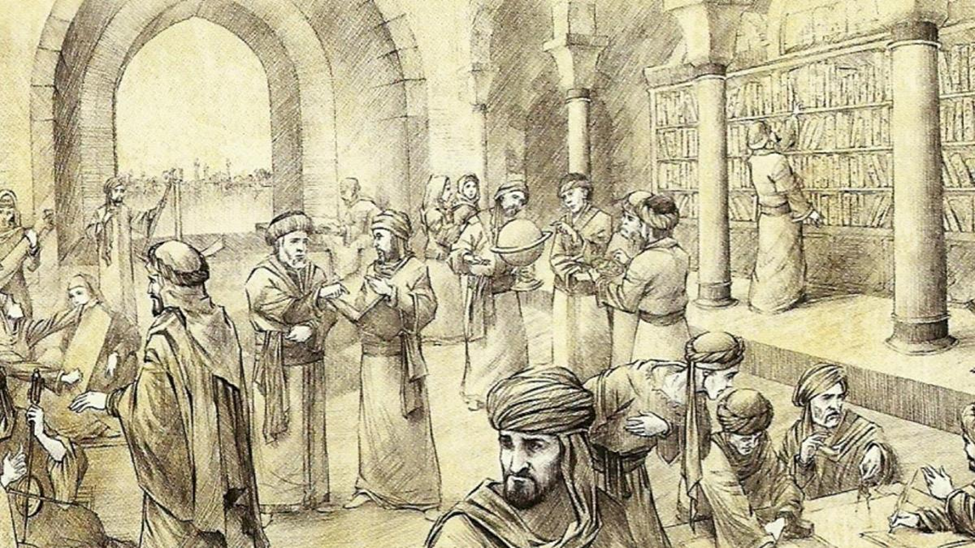
The honest version of this argument, then, is narrower than “civilization is conquest and there is no equilibrium.” History is not actually a closed system where every relationship reduces to conqueror and conquered but trade, translation, intermarriage, scholarly exchange, and diplomacy moved as much of the medieval world as armies did, and the Islamic civilization this argument wants to defend was equally built on those things, on Baghdad’s House of Wisdom translating Greek philosophy, on Andalusian scholars preserving and expanding mathematics and medicine, on trade routes that had nothing to do with a battlefield. A tradition that only remembers its swords is remembering itself badly.
What the argument gets right is smaller and more useful than “embrace conquest.” A community that cannot look directly at the fact that its founders held real power and used it, and that judges its own history by a standard of gentleness it applies to no other civilization on earth, will keep producing a defensive, apologetic posture that convinces no one and satisfies nobody.
The corrective is not to glorify war but is to describe the past accurately, including the violence, include the restraint that followed it, correct the parts of the popular telling that don’t hold up, and stop being embarrassed by the parts that do. Confidence, in the end, is not the same thing as celebration, and a history examined honestly, sword included, tends to earn more respect than one polished for comfort.