

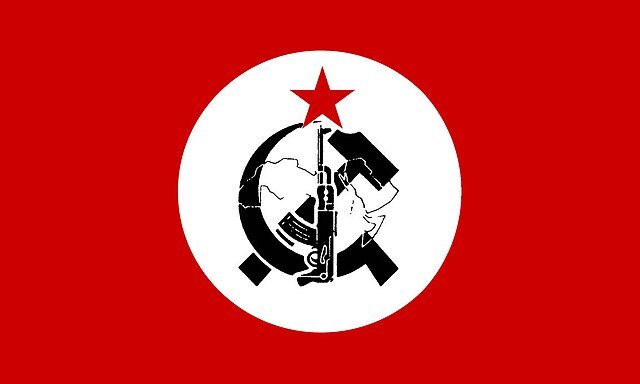

For nearly fifty years, communism was a real force in Middle Eastern politics. It ran from the last days of Ottoman rule to the fall of the Soviet Union. It organized oil workers in Abadan, their hands black by noon, and dockers in Aden, hauling crates under a salt-heavy wind. It filled prison cells in Cairo and Baghdad. For a while, it even ran a country, in South Yemen. Then it collapsed almost everywhere. In its place came a different political language, one built on religion rather than class.
This is not simply a story about a foreign ideology that failed to travel. Marxism gave the region something it never had before: a vocabulary for talking about inequality in structural terms, not moral ones, and a model for organizing outside tribal and religious hierarchies. It reshaped labor politics in Iraq and Egypt. It gave Yemen its only socialist state. It pushed the conversation about colonialism away from grievance and toward theory. But it never became the region’s dominant force. Its failure was not bad luck. It collided head-on with identities that turned out to be more durable than class, and in the wreckage political Islam moved in. That is the argument here, and the rest of this piece tries to show why.
It failed because it collided head-on with identities that turned out to be far more durable than class
The Baku Corridor and Feudal Soil
Marxism entered the region through Baku, not Berlin. After the Bolshevik Revolution, the Caucasus became a corridor for revolutionary ideas moving into Iran and beyond. Comintern organizers made a simple pitch to colonized peoples: the fight against empire and the fight against class exploitation were the same fight. Iran’s Communist Party, founded in 1920, is generally considered the region’s first genuinely local Marxist party.
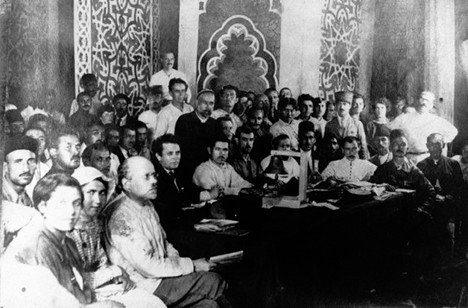
But an idea only spreads if the ground is ready. By the 1920s and 1930s, it was. Land ownership across much of Iraq and Iran still ran on a near-feudal model. A small class of landlords and tribal leaders controlled most of the cultivable land, while the people who worked it lived under permanent debt. Meanwhile, oil was pulling villagers into a new kind of life entirely. Company towns rose around the refineries, the air thick with heat and gas flare, run by foreign managers who paid local workers less and treated them worse than their own. That is exactly the kind of concentrated industrial labor a movement built around unions needs. It was there before the movement was.
Iran’s Communist Party, founded in 1920, is generally considered the region’s first genuinely local Marxist party.
Anti-colonial anger did the rest. Britain and France had split the post-Ottoman Middle East between them, and nationalist movements looking for a theory that explained imperialism in economic terms found Leninist ideas about empire genuinely useful. Behind it all sat Cold War geopolitics. Moscow funded, trained, and gave diplomatic cover to communist parties across the region, not out of ideological loyalty, but to build strategic depth against Western alliances on its southern border. Local parties were often caught between real conviction and the discomfort of taking orders from a foreign patron with its own priorities. That tension shaped, and eventually weakened, nearly every party that grew out of this period.
Four Trajectories: Ideology Meets Reality
The pattern repeated itself with local variations.
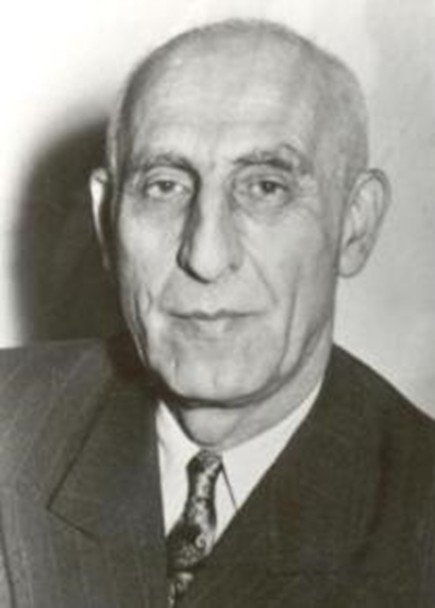
In Iran, the Tudeh Party became one of the best-organized parties anywhere in the Middle East. It built real support among oil workers and army officers. But its hesitation during Mossadegh’s oil nationalization crisis in the early 1950s is still debated as a missed opportunity, and the party never recovered from the repression that followed the Shah’s return to power.
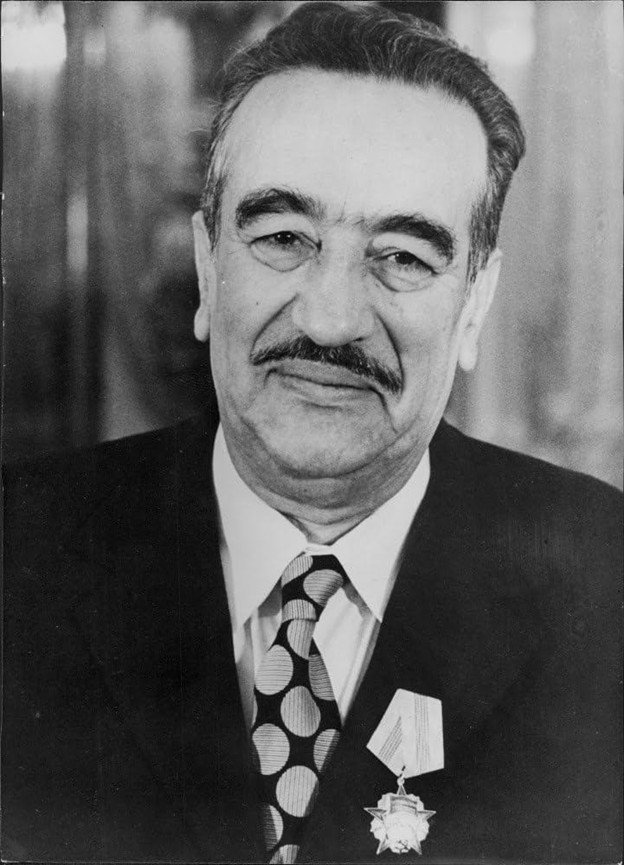
In Iraq, the Communist Party came closer than any other Arab movement to genuine mass politics. It built support among the urban poor, the Shia peasantry, and minority communities, people who found in it one of the only spaces not organized around sect or ethnicity. By the late 1950s, it could bring hundreds of thousands into the street. That size is exactly why the Ba’athist officers who turned on it in 1963 treated its destruction as a first priority, killing thousands of members and sympathizers in the process (Batatu 1978).
Behind it all sat Cold War geopolitics. Moscow funded, trained, and gave diplomatic cover to communist parties across the region, not out of ideological loyalty, but to build strategic depth against Western alliances on its southern border.
Syria’s communist story belongs almost entirely to one man. Khalid Bakdash became the first communist ever elected to any Arab parliament, in 1954, and led his party for over sixty years. In the end, he watched it reduced to a junior partner inside the Ba’ath’s own coalition once Hafez al-Assad consolidated power.
Egypt’s communists never unified into a single party. Still, their base among textile and dock workers gave them real leverage. Nasser handled them the way he handled most rivals: jailing the organizers while quietly adopting their economic program as his own. By 1965, most of what remained had dissolved itself into his Arab Socialist Union.
South Yemen and the Socialist Exception
Yemen is the exception that proves how far this could go. After the British left Aden in 1967, the Marxist wing of the liberation movement pushed out its rivals. By 1970, the country had been renamed the People’s Democratic Republic of Yemen, the only avowedly Marxist-Leninist state the Arab world ever produced. It nationalized land. It banned polygamy. It put women into the workforce and political office at rates unmatched anywhere on the Arabian Peninsula, backed by Moscow, Havana, and East Berlin.
It was also never stable. A brutal internal power struggle in January 1986 killed thousands of party members within days. The state that emerged from it was too weak, politically and economically, to resist unification with the non-Marxist North a few years later (Halliday 1990).
Materialism Collides with Sacred Order
Marxism’s arrival was never just a political event. It was a direct challenge to the religious foundations of everyday life, and people at the time understood it that way. Historical materialism treats religion as a product of economic conditions, not divine truth. Dropped into societies where Islam organized law, family life, and personal identity, that idea was never going to pass quietly. Land reform threatened the religious endowments that funded mosques and schools. Rhetoric dismissing clerics as a class allied with landlords struck directly at people who had been the main source of local authority for generations. South Yemen went furthest of all, replacing sharia-based family law with a secular civil code in 1974, one of the sharpest breaks with Islamic jurisprudence attempted anywhere in the twentieth-century Muslim world.
The response was fast. In the long run, it proved more effective than the Marxist movement itself. Sayyid Qutb, writing from Nasser’s prisons, grouped Marxism together with Western capitalism as two versions of the same problem: a materialist worldview that denied God’s authority over human life. The Muslim Brotherhood had already built a network of mosques, clinics, and welfare programs before Marxism reached its regional peak.
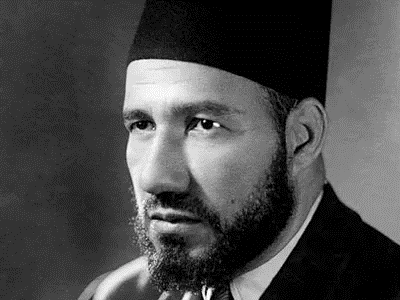
That head start was hard to close, especially outside the big cities, where a party cell meeting in a back room could never match the reach of a mosque hall on a Friday. Communists explained exploitation. The Brotherhood offered moral order and belonging, in language people already trusted.
South Yemen went furthest of all, replacing sharia-based family law with a secular civil code in 1974, one of the sharpest breaks with Islamic jurisprudence attempted anywhere in the twentieth-century Muslim world.
Not every thinker treated this as an either-or choice. Some tried to separate Marxism from its atheism, using it purely as an economic method, a way of reading exploitation without any claim about God. The most serious version of this came from the Iranian thinker Ali Shariati. He reinterpreted Shia theology, especially the story of Imam Hussein’s martyrdom, through the language of revolutionary struggle, borrowing Marxist vocabulary while insisting his ideas stayed authentically Islamic. His lectures in Tehran drew huge crowds. They shaped many of the young revolutionaries who joined the 1979 uprising, the same uprising whose clerical leadership would later turn on the Marxist left that had helped build the movement’s momentum.
The Soviet Collapse and the Ideological Vacuum
By the late 1980s, Marxism was retreating almost everywhere it had once looked strong. The reasons arrived together, not one at a time. Politically, communist parties kept making the same mistake: allying with military rulers who needed them for a while, then turned on them once the shared threat disappeared. Internal splits made things worse, bleeding away strength that state repression alone might not have finished off. Socially, the deeper failure ran further back. Marxism never displaced religion and kinship as the region’s main source of identity. Tribal loyalty in the Iraqi countryside, sectarian belonging in Lebanon and Syria, the sheer weight of Islamic institutional life, all of it proved harder to break than class solidarity. Where communist movements did succeed at scale, they usually worked with these networks rather than against them. That compromise blurred their own ideology and left them exposed once loyalties shifted.
And the ground under the whole project simply moved. Soviet economic stagnation made Moscow’s backing look increasingly unreliable. The one state built entirely on Marxist lines could not feed its own population without subsidies that eventually stopped coming. When the Soviet Union dissolved in 1991, regional communist parties lost their funding and their entire point of reference almost overnight. The Afghan war against Soviet occupation after 1979 became the clearest expression of this shift, pulling the region’s revolutionary energy away from class struggle and toward religion as the language of resistance.
Marxism’s real legacy in the Middle East is not the parties that failed. It is the space their failure left behind. It gave the region a serious vocabulary for talking about inequality and empire. It briefly built the only Marxist state the Arab world ever had. It forced rulers from Cairo to Baghdad to borrow its economics even while jailing its organizers. But it could never out-compete the identities that mattered more to most people than class ever did. The refineries still burned, the docks still worked, and the prison cells eventually emptied. What filled the space they left was not silence. It was something else entirely.
References
Batatu, Hanna. 1978. The Old Social Classes and the Revolutionary Movements of Iraq. Princeton: Princeton University Press.
Halliday, Fred. 1990. Revolution and Foreign Policy: The Case of South Yemen, 1967–1987. Cambridge: Cambridge University Press.
Disclaimer: The views and opinions expressed in this article are solely those of the author. They do not necessarily reflect the official policy, position, or views of the author’s affiliated institution, organization, or employer.