


“…Islam is not merely confined to the spiritual tenets and doctrines or rituals and ceremonies. It is a complete code regulating the whole Muslim society, every department of life, collectively and individually”
~Jinnah, September 1945
Abstract
This article aims to examine the religious and political landscape of late colonial India. Its main focus will be on the different interpretations of the ‘ulama regarding the idea of Pakistan and the future of the Muslims of South Asia. Muhammad Qasim Zaman’s book, “Islam in Pakistan: A history” will be used as a primary source
Introduction
South Asia has been home for centuries to rich traditions of learning in the Islamic foundational texts as well as law, theology, and philosophy. Yet, it is a remarkable fact that the doctrinal orientations that now dominate Sunni Islam in South Asia all took their distinctive shape only during colonial rule in the late nineteenth century. Shi’ism, too, underwent significant changes during this period. In what ways were Islam and Muslim politics in colonial India shaped by political developments in the wider Muslim world? How, in late colonial India, did the movement for a separate Muslim homeland both develop and navigate its way through this fraught religio-political landscape?
In the late colonial India there were several categories of Muslims. There were traditional Muslims, modernist Muslims, and secular Muslims. This variety led to various interpretations of Islam as well as the idea of Pakistan. Some opposed it, others supported it. Muslim league, however, managed to bring a lot of Muslims on their side by 1945-46 elections and succeeded in its mission of a separate homeland.
Indian politics and wider Muslim world:
After the war of independence of 1857 and its destructive consequences for Muslims, the ulama went into self-preserving mode. They tried to distance themselves from politics and focused on the religious and spiritual training of the Muslims. The wider Muslim world, however, played a crucial role in organizing Muslims(and even Hindus). With a vigorous Indian Muslim press, there also was a new awareness in many circles of the dismal plight Muslims of India shared with their coreligionists abroad.
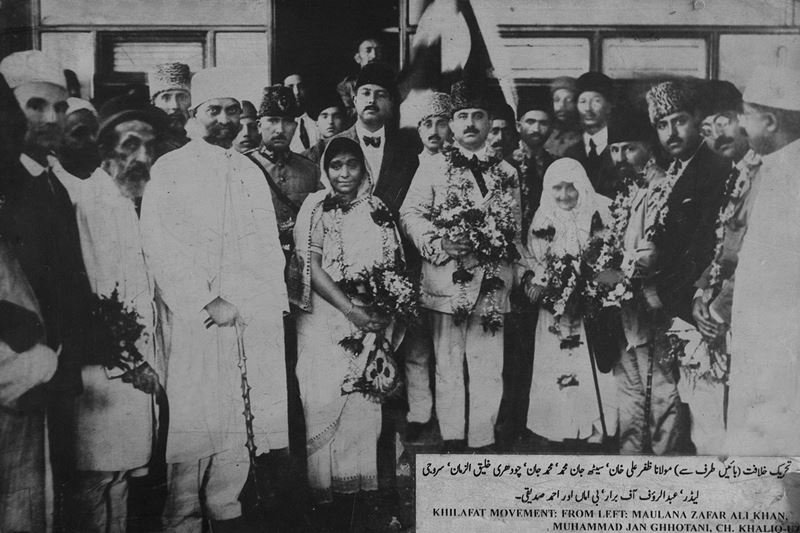
Morocco was brought under French colonial rule in 1912 and Italy soon came to rule Libya. Greece, Bulgaria, Serbia, and Montenegro had joined hands against the Ottoman Empire, which fared poorly in these Balkan wars. There was much to unsettle such accommodation as many Muslims had made over the past half century to life under colonial rule. Khilafat movement played an immense role in bringing Muslims together. Many Muslims had been willing to give up their jobs when the ulama told them that they could not work for or under a government that was hostile to Islam. The movement had also shown that it was possible for the English-educated and the ulama to come together on a shared platform. But the limits of such cooperation were equally telling, and no less significant for future developments.
National belonging or Pan-Islam: What is the way forward?
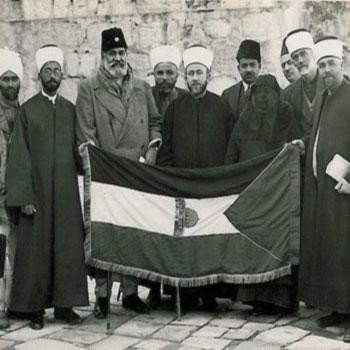
Khilafat movement had raised the question, more forcefully than it had been posed before, of what the relationship was between pan-Islam and national belonging. Was it the case, as Iqbal had asserted in a speech that was quoted in the 1911 census of India, that the “idea of Islam is … our eternal home or country wherein we live, move and have our being?” At the other end of the spectrum on this question, the Kemalists had decided that no such reconciliation was possible. Less vocally, Mawlana Azad, too, moved away from pan-Islamism and in the direction of secular nationalism as the best framework in which to promote the interests of the people of India.
Politics in the 1930s and the movement for Pakistan:
In a speech in late 1937, Husayn Ahmad Madani, a leading figure in the Jam’iyaat al- ulama-i Hind (JUH) and a close ally of the Congress, had made the remark that nations were defined by territory, so that the Muslims living in the subcontinent were part of the Indian nation (qawm). Iqbal, however, confronted Madani and believed that to see a nation as defined in territorial terms was, in case of Muslims, to sunder the unity of their global community. Madani, for his part, thought that his way of making an accommodation with Indian nationalism was in fact truer to the spirit of Islamic universalism. He argued, differences of religion were immaterial to the constitution of a nation.
In subsequent years, he would develop this point further to assert in articulating his opposition to the demand for a separate Muslim homeland. Iqbal, in turn, countered that Madani and the Deobandi ‘ulama are endorsing composite nationalism in India, arguing that this modern ideology would reduce Islam to a mere ethical system and destroy its distinct social order. In a pointed rhetorical move, Iqbal even compared their position to that of the Ahmadis—claiming that by embracing nationalism, they were effectively admitting Islam was imperfect and in need of supplementation, much like a new prophecy.
Speaking in Lahore on March 22, 1940, as the president of the Muslim League, a decade after Iqbal’s famous address to the party, Jinnah made the clearest case thus far that the Muslims of India were no mere minority but rather a distinct nation and were accordingly entitled to a political future of their own. The Muslim League, however, was not as popular as the Congress. So, it needed support and recognition from all the factions of Muslims. It laid down two claims:
- Muslims have distinct identity. But this claim was not a particularly hard sell. The idea that India was inhabited by different religious communities was a popular idea way before Muslim League. Even those Muslims who were allied with the Congress did not deny that Muslims were, indeed, a community set apart from the others.
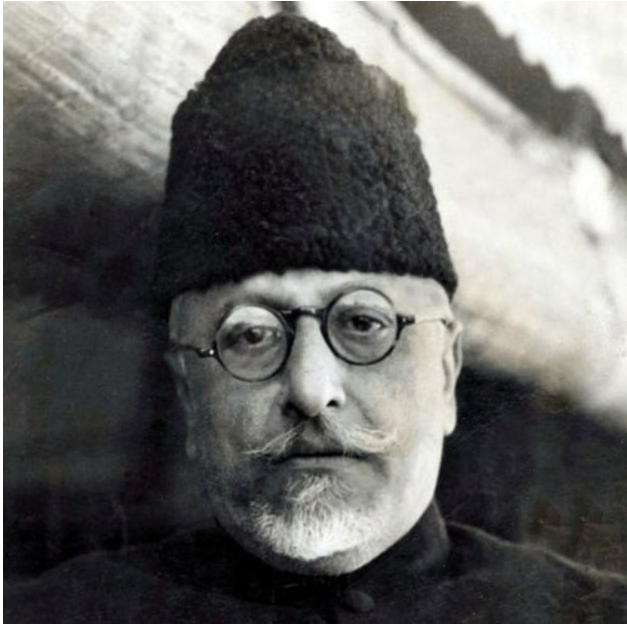
- The second claim was the exclusive representation of the Muslim community. This claim was extremely contentious. Congress wanted to be seen as representing the people of India as a whole. In striking illustration of that claim, it had elected Abul-Kalam Azad to preside over the party’s annual session in March 1940. Muslim congressmen like Azad were a standing argument against the Muslim League’s raison d’etre, just as they were against the very idea of a separate Muslim nationhood.
Jinnah, on the other hand, had no illusions about these challenges. Not long after the Lahore resolution, the UP branch of the Muslim League set up a committee to formulate a vision of what an Islamic state would look like. Its members included, not limited to supporters of the League, Sayyid Suleiman Nadwai, Azad Subhani, Abd al-Majid Daryabadi, and Sayyid Abul-A’la Mawdudi.
The league leadership’s failure to take such discourses seriously, however, gave good reasons for the Islamists and the Sunni ulama to resist coming over to Jinnah’s side. Mawdudi, for one, spent the last years of colonial rule bitterly opposing the League on grounds that its westernized leadership was unsuited to the task of establishing an Islamic state. For their part, the Sunni ulama feared that they and their conceptions of Islam would come in for some rough treatment in a state governed by the modernists.
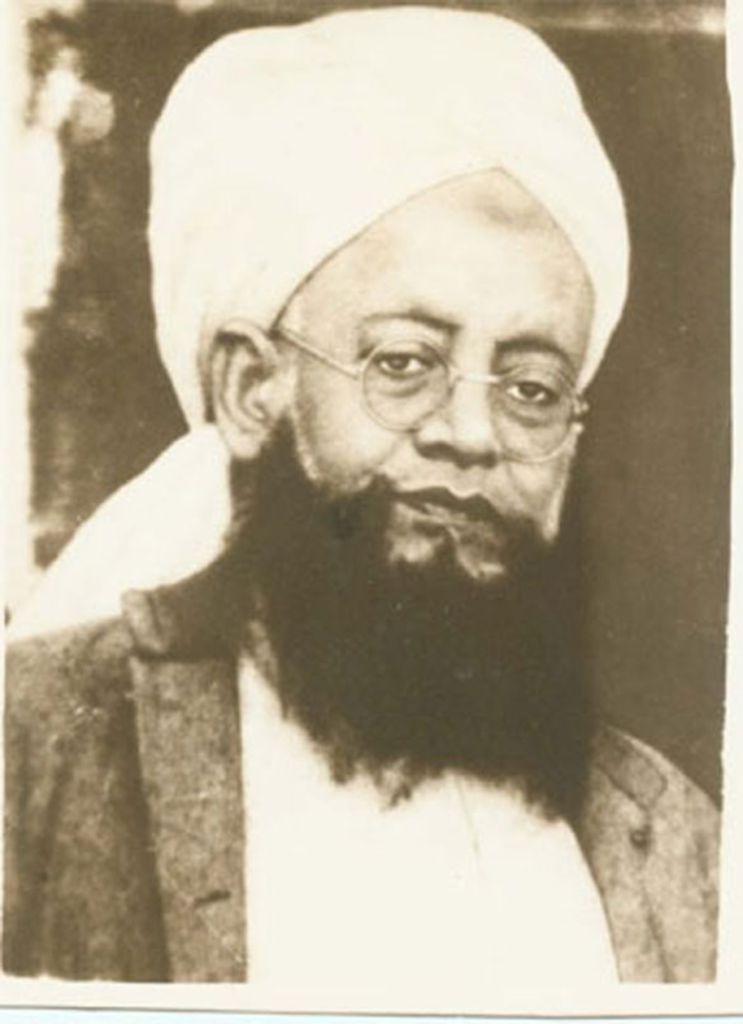
The religious arguments for supporting the Muslim League were no less weighty, however. The demand for a separate homeland had created the prospect of establishing an Islamic state with a central role in it for the ulama, and there was no telling when, if ever, any such opportunity would arise again. Ultimately, the ulama had to decide whether to trust the Muslim League or the Congress, and some notable figures had convinced themselves, as Ashraf Ali Thanawi, that the Muslim League was the preferable option.
Conclusion
In the final decades of colonial India, the Muslim League successfully consolidated support from diverse Muslim factions, ultimately paving the way for the creation of Pakistan in 1947. A key ally was the Jam’iyyat al-ulama-i Islam (JUI), a pro-League breakaway from the larger Jam’iyyat al-ulama-i Hind, which played a crucial role in mobilizing religious backing.
However, Muslim opinion was far from monolithic. The Barelawis, for instance, were divided on the question of Pakistan, with several prominent figures within the system openly opposing the Pakistan demand. Meanwhile, the All-India Sunni Conference, a primarily Barelawi organization, lent its support to the League. This fractured landscape was vividly captured in the contrasting stances of two influential religious figures: Hussain Ahmed Madani, a pro-Congress scholar who argued that supporting Jinnah was sinful because he did not represent a binding legal consensus (ijma’), and Jama’at Ali Shah, another League supporter who went so far as to characterize Jinnah as a saint (wali Allah). Coming from figures of such standing, these endorsements and condemnations carried considerable weight, Madani framing the Pakistan movement as a theological deviation, while Jama’at Ali Shah cast it as a sacred cause.
Despite this internal opposition and deep ideological rift, the Muslim League managed to secure a decisive electoral victory in the 1945–46 elections, winning majority seats in the two largest provinces, Punjab and Bengal. That mandate, won against a backdrop of intense debate and dissent, proved instrumental in legitimizing the League’s claim to speak for India’s Muslims and in shaping the eventual partition of the subcontinent. Yet it is crucial to recognize that the very religious authority which the League had leveraged to gain legitimacy could also be withdrawn, and this is precisely what unfolded in the years following independence.
Right after 1947, fierce tensions erupted between modernists and the ulama, as many religious scholars felt deeply betrayed. Having supported the Pakistan movement in the hope of establishing an Islamic system, they found the new state charting a very different course, one shaped more by secular governance and modernist impulses than by their vision of a theocratic order. From 1947 to the present day, this underlying tension has kept Pakistan’s political landscape in a state of perpetual volatility, with Islamists, modernists, and the ulama locked in an ongoing contest to impose their respective understandings of what Pakistan should be. Far from a settled nation, Pakistan emerges as an “Islamic mosaic”—a complex, fragmented, and fiercely contested space where competing interpretations of faith, law, and identity continue to clash, ensuring that the question of what it truly means to be an Islamic state remains as unresolved today as it was in 1947.
References/ Further reading:
Zaman, Islam in Pakistan: A history