


Forgotten Scripts

The Overlooked General: Al-Muhallab and the Dawn of Islam in South Asia

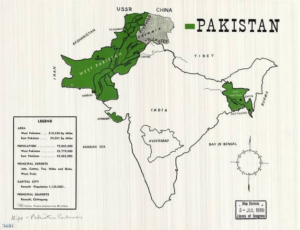
Some artifacts remain buried beneath the rubble, and some golden pages lie hidden under the dust of time in the alley of an underground library. Lanterns hang upon the walls, long devoid of oil, their glass darkened by dust and black smoke, testifying to a once-royal glimmer. The chair near the towering shelves whispers of the owner’s lost glory, while the Moroccan leather bindings, worn yet dignified, stand as silent witnesses to the wealth of old, indeed, to a royalty long past, or an obsolete reign. There, spirits of forgotten alleys stir once more; leaves of the leather-bound book turn at the breath of some history devotee, and the magnificent words upon those pages resurface in this digital world, where the debates of “Ronaldo or Messi” have replaced “Jarir or Farazdaq” (famed Arab poets, whose anecdote we shall meet at the end). The air blows again, and the magic turns the leaves to the chapter of legends, who, like books, remain overlooked, like al-Muhallab ibn Abī Ṣufra, a man often ignored in the history of the subcontinent. In the dim corridors of memory, overshadowed by other conquerors, his early steps of Islam in this land remain forgotten. Yet he was the hero against the Kharijites, and the bridge between the Arabs and the Ajam, Persia, Khurasan, and Sind. They say that history is the first identity of a region. It is often claimed that the story of Islam in the subcontinent begins with the advent of Muḥammad ibn Qāsim. But the truth is: al-Muhallab ibn Abī Ṣufra set foot in today’s Pakistan nearly half a century before Ibn Qāsim. Pakistan’s story, in spirit, begins the day the first preacher or conqueror entered this land to propagate Islam. Muslim traders had already reached these coasts during the reign of the Righteous Caliph ʿUmar ibn al-Khaṭṭāb (may Allah be pleased with him), and continued to do so under the other Rāshidūn Caliphs. Later, in the time of Amīr Muʿāwiya ibn Abī Sufyān (may Allah be pleased with him), al-Muhallab crossed the Khyber Pass into what is now Khyber Pakhtunkhwa, advancing towards Kabul, then turning south along the Indus. From Multan to Qallat, he traced his expedition, and in doing so, inscribed what may rightly be called the first chapter of Pakistan Studies in the subcontinent, if one views Pakistan as an ideological and spiritual entity. The Subcontinent: Where Civilisations Were Kneaded This, however, does not deny the deeper heritage of Pakistan in the ancient civilizations of this soil, nor the enduring significance of indigenous culture. Shalwar qamīṣ, for instance, was already the dress of this region before the advent of Islam, and remains preserved to this day. What truly evolved was religion, like water, taking the shape of the subcontinent’s vessel, kneaded into its soil alongside other elements of history and culture. The First Muslim ‘Expedition’ in the Subcontinent The Khyber Pass became the second path trodden by Muslim horses into the lands of Khyber and Sindh (present-day Pakistan). The first was their arrival on the Makran coast, although it was through trade, not conquest; the third was their approach from the Sindh coast. But it was in 44 AH / 664 CE that al-Muhallab ibn Abī Ṣufra entered this land in earnest. His advent is recorded in nearly all classical Islamic chronicles, Futūḥ al-Buldān, Tārīkh al-Ṭabarī, and al-Kāmil fī al-Tārīkh of Ibn al-Athīr, among others. Orientalists, too, have taken note of it. Andre Wink, in his Al-Hind: The Making of the Indo-Islamic World, writes:  “In the era of Amīr Muʿāwiya, when ʿAbdullāh ibn ʿAbd al-Raḥmān and al-Muhallab ibn Abī Ṣufra were engaged in battle against the Kabul Shahi dynasty in the regions of Zabul and Kabul, it was in that very time, in the year 664 CE, that al-Muhallab pressed forth from Kabul, passing through Bannu, Lahore (Swabi), until he reached Multan.” The Urdu Encyclopedia of Islam likewise records that when Rājā Chach (father of Rājā Dāhar, about whom the Chachnāma was later written) conquered Multan, it was only four years after his death that al-Muhallab reached the city in 664 CE. In the same year, Muslims had also taken Sajistan and Makran. Multan Fort itself, however, remained unconquered until the time of Muḥammad ibn Qāsim. Al-Muhallab’s march led him from Lahore (Swabi) to Bannu (recorded as Banna بنۃ in Arabic texts), and thence along the Indus towards Multan. Life and Personality of Al-Muhallab Al-Muhallab was born in 629 CE to Zālim ibn Suraqah, known as Abū Ṣufra, two years before the Prophet’s ﷺ passing in 632 CE. Thus, he was not a Companion but a Tābiʿī. He encountered ʿUmar ibn al-Khaṭṭāb and other noble Companions. Indeed, ʿUmar once called him “the best among his brothers” (al-Iṣābah fī Tamyīz al-Ṣaḥābah, al-ʿAsqalānī, p. 205). He was born in Dabba (present-day Dibba, Oman), near the Strait of Hormuz, so close to Gwadar that it can be sighted without aid. Al-Muhallab had two wives and eight children, seven sons and one daughter. All proved capable commanders. His daughter, Hind bint al-Muhallab, was married to al-Ḥajjāj ibn Yūsuf, though the marriage ended in separation. He also narrated a few ḥadīth.  Yet the most glorious chapter of his life was his seventeen-year struggle against the Kharijites. He crushed them with wit, patience, and valour. An erudite general, he knew their false doctrine well and fought them with intellect as much as with the sword. History has preserved this struggle in full magnificence. For his brilliance in leadership and administration, he was appointed governor of Persia, Mosul, Armenia, Azerbaijan, and Khurasan. He was an optimist, deeply grateful. When he lost one eye in battle, he thanked Allah that the rest of his body was spared, and that blessing was enough to make him forget the loss. Among his words of wisdom were:  “The best sitting or assembly is that in which vision broadens, and in which the benefits for those present increase.” Al-Muhallab embodied the principles of Islam in politics as well. He fought beside ʿAlī ibn Abī Ṭālib against the Kharijites, and after ʿAlī’s martyrdom, gave allegiance to Amīr Muʿāwiya. During Muʿāwiya’s reign, he

The Overlooked General: Al-Muhallab and the Dawn of Islam in South Asia Read More »

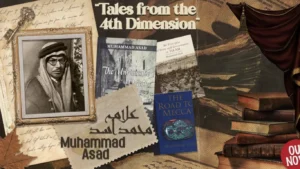
Muhammad Asad, Europe’s Gift to Pakistan

Born in 1900 as Leopold Weiss to Jewish parents in the city of Lwow, then part of Austria, Muhammad Asad’s extraordinary journey carried him from Europe’s war-torn landscapes to the deserts of Arabia and finally to the heart of Pakistan’s intellectual and political life. By the time of his passing in 1992, he was celebrated as a foremost Muslim intellectual, author of The Road to Mecca, and the holder of Pakistan’s first passport. Early Years and Search for Meaning Asad grew up in a well-off Jewish household, privately tutored in scriptures and fluent in Hebrew and Aramaic by his teenage years. Yet religion was far from his concerns when he entered the University of Vienna in 1920 to study art history. Like many young Europeans in the aftermath of World War I, he drifted through Vienna’s literary and artistic circles, searching for meaning in a continent scarred by destruction and disillusionment. Restless and estranged from academia, Asad moved to Berlin, working briefly as a journalist before traveling to Mandatory Palestine in 1922. There, amid political upheaval and the rise of Zionism, he found himself drawn not to Jewish nationalism but to the simplicity of Arab life. The honesty of the Bedouin and the spiritual vitality of Islam resonated with him more deeply than the decayed moral order he had left behind in Europe. By 1926, Asad had formally embraced Islam, taking the name Muhammad Asad. It has been alleged that he had embraced Islam in the hands of Maulana Sadr ud din, Imam of Berlin Mosque run by Lahore Ahmediyya Movement. However, the veracity of this claim is not unquestionable. His fascination with the Arab world soon became devotion, leading him to spend years in the deserts of Arabia, where he developed a deep command of Arabic and grew close to King Ibn Saud. Intellectual Contributions and Encounters Asad’s writings began attracting attention in Europe. His articles in the Frankfurter Zeitung, later compiled as The Unromantic Orient, painted the Arabs as a people of resilience and authenticity. He became increasingly concerned with the political fate of Muslims, confronting Zionist leaders such as Chaim Weizmann and defending Palestinian rights long before such positions gained international attention. During his travels across the Arab world, Asad met many influential figures, including resistance leaders. In Libya, he encountered Omar Mukhtar, the legendary “Lion of the Desert,” who was leading a valiant struggle against Italian colonial rule. The meeting left a deep impression on Asad: here was a man embodying courage and sacrifice.  In India during the 1930s, he encountered the poet-philosopher Allama Iqbal, who profoundly influenced his thought. Iqbal urged Asad to abandon his wanderings and devote himself to the intellectual groundwork of a future Islamic state. Their conversations shaped Asad’s conviction that Islam offered not only a faith but also the basis for a just political order. Asad contributed to the Pakistan Movement through lectures, articles, and the founding of his periodical Arafat, in which he argued that Pakistan was not to be merely a refuge for Muslims but a state dedicated to realizing Islamic ideals in politics, law, and society. Pakistan and State-Building After the Partition, Asad settled in Lahore. At the invitation of Punjab’s Chief Minister, he established the Department of Islamic Reconstruction in 1947, the first official institution in Pakistan explicitly tied to Islam. Soon after, he joined the Foreign Service, becoming Deputy Secretary in charge of the Middle East Division. Carrying the very first passport stamped “Citizen of Pakistan,” Asad toured Arab capitals to explore the possibility of forming a league of Muslim nations. His plans collapsed with the assassination of Prime Minister Liaquat Ali Khan. Later, Asad served as Minister Plenipotentiary at Pakistan’s Mission to the United Nations. Yet his independent spirit and strained relations with colleagues pushed him out of government service. During this period, he produced some of his most influential works, including The Road to Mecca and The Principles of State and Government in Islam. Later Years and Legacy Although sidelined from official posts, Asad remained intellectually engaged with Pakistan. He was invited back under General Ayub Khan to advise on constitutional matters, and again by General Zia-ul-Haq in the 1980s. True to his vision, he argued consistently for an inclusive interpretation of Islam, insisting, against prevailing orthodoxy, that Muslim women had equal political rights, even to the office of Prime Minister. Muhammad Asad’s writings influenced thinkers across the Muslim world. Sayyid Qutb of Egypt drew upon his works, while Margaret Marcus, a Jewish American, converted to Islam after reading The Road to Mecca and became the scholar Maryam Jameelah. Though he spent much of his later life abroad, Asad cherished Pakistan as the embodiment of Iqbal’s dream and his own intellectual labor. He was its first citizen.  Towards the end of his life, Asad moved to Spain, where he lived with his third wife, Pola Hamida Asad, an American national of Polish Catholic descent who had also converted to Islam. He remained in Granada until his death on 20 February 1992, at the age of 91. He was laid to rest in the Muslim cemetery of Granada, in Andalusia, a fitting resting place for a man whose life had bridged East and West, and who cherished the memory of al-Andalus as a symbol of Islamic civilization’s intellectual and cultural vitality. Talal Asad: An Intellectual Legacy Continued and Gen-Z Resonance  Muhammad Asad’s son, Talal Asad, went on to become one of the most influential anthropologists of the late twentieth and early twenty-first centuries. His work on secularism, colonialism, and the anthropology of religion has shaped debates in universities across the globe. Building on the intellectual courage of his father, Talal examined how concepts of religion and power are intertwined in modern societies. His work continues to enjoy popularity among Gen-Z and Millennial readers, and on digital forums and social reading platforms, his words are frequently quoted by young Muslims  Conclusion Muhammad Asad’s life was a bridge between worlds: between Judaism and Islam, Europe and Arabia, philosophy and faith. In Pakistan’s formative years, he offered both

Muhammad Asad, Europe’s Gift to Pakistan Read More »

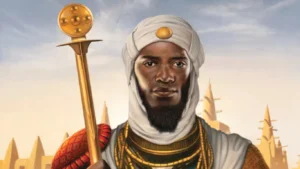
Mansa Musa: The Golden Emperor Who Redefined Wealth

When we talk about the wealthiest people of all time, few names stand as prominently as Mansa Musa I of Mali, the ninth Mansa (emperor) of the Mali Empire. Born around 1280 CE and ruling from 1312 to 1337 CE, Musa’s net worth has been estimated by modern historians at the staggering equivalent of $400–500 billion in today’s currency, far surpassing Jeff Bezos or Elon Musk at their peaks. His extraordinary wealth was rooted in Mali’s control over natural resources, particularly gold, of which the empire produced nearly 50% of the world’s supply in the 14th century. According to Arab historian Al-Umari, Mali’s mines at Bambuk, Boure, and Galam yielded several tons of gold annually, with each ton in medieval times valued at billions of today’s dollars. By comparison, just Musa’s pilgrimage caravan alone carried over 24,000–30,000 pounds (11–14 metric tons) of gold dust, spread across 80–100 camels, each loaded with 300 pounds (136 kg) of pure gold. Gold and Salt: The Backbone of Wealth Alongside gold, the salt trade was equally lucrative. In Mali’s economy, a single 200 kg block of salt could fetch the equivalent of an ounce of gold in southern markets. Musa’s empire controlled the Taghaza and Taoudenni salt mines, which produced thousands of camel-loads yearly. Taxes on caravans traveling the trans-Saharan routes further enriched Mali. Estimates suggest that the empire collected revenues in the millions of gold dinars annually by taxing the flow of goods such as ivory, slaves, and kola nuts. Musa also expanded Mali’s borders to incorporate strategic cities like Timbuktu and Gao, extending the empire over 2,000 miles east to west and ruling a population of 40–50 million people across modern Mali, Senegal, Gambia, Guinea, Niger, Nigeria, Mauritania, and Chad. The 1324 Pilgrimage to Mecca Mansa Musa’s 1324 pilgrimage to Mecca remains one of the most extravagant events in history. His caravan included 60,000 attendants, with 12,000 slaves clothed in fine brocade and Persian silk. Each slave is reported to have carried a 4-pound (1.8 kg) gold staff, while heralds distributed gold dust to the poor along the way. The sheer volume of spending in Cairo disrupted the Egyptian economy. Contemporary sources such as Al-Umari record that Musa’s spending reduced the value of gold by 20–25%, causing inflation that lasted over a decade. In modern terms, it was as if a single man had destabilized an entire national economy through overspending. Cultural and Educational Patronage Yet Musa’s wealth was not just displayed in gold but invested in cultural and religious development. In Timbuktu, he commissioned the Djinguereber Mosque, built in 1327 by the Andalusian architect Abu Ishaq al-Sahili, at a reported cost of 200 kg of gold (over $10 million today). He also funded the expansion of the University of Sankore, which at its height housed 400,000–700,000 manuscripts, rivaling the libraries of medieval Europe. Timbuktu’s population swelled to nearly 100,000 inhabitants, making it one of the largest urban centers of its time. Musa also established educational networks linking Mali to Cairo, Fez, and Baghdad, drawing scholars and traders to West Africa. This intellectual flowering, combined with architectural achievements, ensured that his wealth left a lasting legacy beyond material riches. Factors Behind Musa’s Extraordinary Fortune Five major factors explain Musa’s extraordinary fortune: first, his monopoly over gold and salt, resources that accounted for nearly two-thirds of Mali’s revenues; second, his control of trade routes, which allowed him to tax every caravan crossing the Sahara; third, global demand, since both Europe and North Africa depended on West African gold to mint coins; fourth, political stability, as his armies secured borders and ensured uninterrupted trade; and fifth, his charismatic leadership, most famously displayed during the pilgrimage that made Mali internationally famous. Musa’s fame reached Europe, where he was immortalized in the Catalan Atlas of 1375, depicted holding a golden nugget and a scepter, symbolizing his unmatched riches. Legacy and Historical Significance Modern economists argue that Musa’s net worth in today’s terms would outstrip any billionaire in history, with estimates around $450 billion. Unlike modern fortunes tied to fluctuating stock prices, Musa’s wealth rested on tangible resources and direct political control of gold and salt mines. Even when adjusted for economic scale, his ability to singlehandedly affect the price of gold across the Mediterranean demonstrates a level of influence no individual today could replicate. After he died in 1337 CE, Mali began to fragment under weaker successors, and by the late 15th century, the empire was eclipsed by the rising Songhai Empire. Nevertheless, Musa’s reign remains a benchmark in history, representing the pinnacle of African wealth, power, and cultural patronage. Mansa Musa’s story illustrates that true wealth is not only measured in gold but also in legacy. His reign left behind mosques, schools, and manuscripts that shaped West African civilization for centuries. With control over half of the world’s gold and mastery of trade networks, he became the richest man in recorded history, a title few dispute. His impact stretched from Cairo to Timbuktu, from European maps to Islamic scholarship, ensuring his place as both a financial titan and a cultural visionary whose wealth transformed not only Mali but the world.

Mansa Musa: The Golden Emperor Who Redefined Wealth Read More »

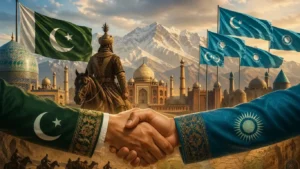
500 Years of Shared Destiny: The Historic, Cultural, and Legal Case for Pakistan’s Integration into the Organisation of Turkic States (OTS)

The 500th anniversary of the founding of the Mughal Empire on April 21, 1526, serves as a poignant reminder of the indelible Turkic imprint on the soul of South Asia. When Zahir-ud-din Muhammad Babur, a descendant of both Emir Timur and Genghis Khan, established his reign in Delhi, he did not merely found a dynasty; he transplanted a Central Asian administrative, military, and cultural ethos that defines modern Pakistan today. This historic milestone underscores a profound legal and cultural basis for Pakistan to seek formal entry into the Organisation of Turkic States (OTS). While the OTS was founded on the principle of sovereign Turkic-speaking nations, its evolving framework—exemplified by the observer status of nations like Hungary—allows for the inclusion of states that share a “Turkic heritage.” Pakistan’s claim is rooted in its status as the primary successor to the Timurid (Mughal) legacy, a fact immortalized in the imperial seal of the last Emperor, Bahadur Shah Zafar. The seal explicitly traces his lineage back to Emir Timur, legally and symbolically anchoring the region’s sovereignty in Turkic bloodlines for centuries. The demographic and social fabric of Pakistan remains a living museum of these migrations. The country is home to a vast “Turkic Diaspora” comprising lineages such as the Changezi, Taimuri, Chughtai, Barlas, and Qizilbash. Families bearing the titles of Beg, Mirza, and Uzbek continue to play pivotal roles in the nation’s governance and military, representing a genetic and social fusion that occurred as Central Asian tribes intermingled with the local populace over a millennium. This tradition of governance began long before the Mughals, with the Ghaznavids and the various dynasties of the Delhi Sultanate establishing a “Turkic State Tradition” that introduced Persian-Turkic bureaucracy to the subcontinent. Even the national language, Urdu, serves as a linguistic bridge; its name is derived from the Turkic word Ordu (army or camp), and it remains saturated with Turkic vocabulary and phonological structures that are similar to that of the Turkish language. Beyond the material and the genetic lies a profound spiritual and philosophical kinship. The intellectual foundation of Pakistan, as envisioned by its national poet Allama Iqbal, is deeply rooted in “Mevlevism.” Iqbal considered the Anatolian mystic Maulana Rumi to be his spiritual guide, creating a bridge of thought that links the shrines of Konya to the philosophy of Lahore. Coincidentally 21st April 2026 also marks the 88th Death Anniversary of Allama Iqbal who was also honored with a symbolic tomb at Konya within the vicinity of the shrine of Maulana Rumi. This bond was further solidified during the modern era by the Khilafat Movement, where the Muslims of the British Raj displayed unprecedented solidarity with the Ottoman Empire during its most existential crisis. This historical loyalty has transitioned seamlessly into the 21st century, where Pakistan, Turkey, and the Central Asian Republics collaborate on high-level defense, trade, and diplomatic initiatives. By joining the OTS, Pakistan would not be embarking on a new path, but rather formalizing a millennium-old journey that began with the hoofbeats of Babur’s cavalry five centuries ago. The presence of these foundational saints in modern-day Pakistan represents a direct ethnic and scholarly transplant from the Turkic heartlands of Central Asia, shaping the very core of the region’s Muslim identity. Sayyid Jalaluddin Surkh-Posh Naqvi Al-Bukhari, migrated to Uch Sharif in the 13th century from the city of Bukhara, bringing with him the sophisticated administrative and spiritual traditions of the Turkic-Uzbek steppes; his descendants became the custodians of a Turko-Islamic heritage that bridged the gap between the ruling Turkic elite and the local masses. Similarly, Bahauddin Zakariya, though born in the Punjab, belonged to a family that had migrated from the Khwarzam Central Asian scholarly hubs, and his establishment of the Suhrawardi order in Multan was a pivotal moment in integrating the Turkic religious tradition with local Sufism. In 2008, Konya in Türkiye and Multan in Pakistan were declared sister-cities, in recognition of their spiritual bonds through the Sufi tradition, represented by Muhammad Jalaluddin Rumi and Bahauddin Zakariya. Data Ganj Bakhsh Ali Hajweri, arriving in the wake of the Ghaznavid conquests, served as the primary intellectual bridge for the Turkic military expansion into the subcontinent. His seminal work, Kashf-ul-Mahjoob, provided a Persian-Turkic philosophical framework that allowed for the peaceful conversion and social organization of millions. Collectively, these saints did not merely spread religion; they established the “Soft Power” of the Turkic world—introducing Central Asian architecture, the Persianized-Turkic administrative ethos, and a spiritual kinship that remains the bedrock of Pakistan’s cultural and political affinity with the modern Turkic states today. To establish a formal link between Pakistan and the Organisation of Turkic States (OTS), the primary legal basis rests upon the Nakhchivan Agreement of 2009, specifically Article 16, which outlines the criteria for membership and observer status. While the organization originally emphasized “Turkic-speaking” nations, its legal evolution has shifted toward a broader definition of “Turkic identity and heritage.” This shift is codified in the “Turkic World Vision 2040“, which allow states with deep historical, cultural, and ethnic ties to the Turkic world to participate. Pakistan’s legal justification is rooted in its status as a primary successor to the Timurid (Mughal) Empire, a fact legally evidenced by the imperial seals of the Mughal monarchs—such as that of Bahadur Shah Zafar—which explicitly trace the region’s sovereignty to Emir Timur. This establishes a “Turkic State Tradition” (Töre evolving to become the more dominant Hanafi Islamic legal tradition) that has governed the Indus Valley region (modern day Pakistan) for centuries, creating a continuous legal chain of Turkic administration system from the Ghaznavids to the modern Pakistani state. As recent as April 6th 2026, Pakistan and Turkey signed an MOU on judicial cooperation at the Supreme Court of Pakistan focusing on judicial exchange, capacity building, introducing modern technologies and sharing of best practices in adjudication. The most significant precedent for Pakistan’s entry is Hungary, which secured observer status in 2018. Hungary’s inclusion was not based on linguistic dominance but on the recognition of “Turkic heritage” and the historic presence of Kipchak-Turkic tribes. Pakistan’s case is even more robust; the country serves as a “living

500 Years of Shared Destiny: The Historic, Cultural, and Legal Case for Pakistan’s Integration into the Organisation of Turkic States (OTS) Read More »

Scroll to Top