

A review essay on David Lelyveld, Aligarh’s First Generation: Muslim Solidarity in British India (Princeton University Press, 1978)
Some books age into monuments and stop being read. David Lelyveld’s Aligarh’s First Generation: Muslim Solidarity in British India, first published by Princeton University Press in 1978, has had the opposite fate. Nearly half a century on, it is still one of the sharpest accounts we have of a question that refuses to settle: how did a scattered collection of Muslim service families, landholders and scholars in nineteenth-century India come to think of themselves as one community with shared political interests? Lelyveld’s answer is not that they always had. It is that the sense of being a single Muslim public was assembled, at a particular time and place, by particular people, and that much of the work was done inside one college.
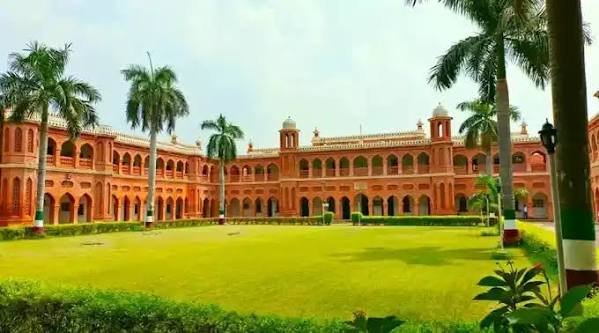
That college was the Muhammadan Anglo-Oriental College at Aligarh, founded by Sir Sayyid Ahmad Khan in 1875 and later grown into Aligarh Muslim University. Lelyveld studies its first twenty-five years, roughly 1875 to 1900, and the cohort of English-educated Muslims it sent out into north India. What makes the book worth returning to is its refusal of the origin myth. Aligarh is usually narrated as the cradle of Muslim modernism or the seedbed of Pakistan, depending on who is telling the story. Lelyveld does something less comfortable and more useful. He treats the college as a workshop and watches solidarity being built, with all the improvisation, contradiction and cost that any act of construction involves.
The World Before The Qaum
The book’s opening move is to recover the world that Aligarh set out to change. Before there was an all-India Muslim community in any politically meaningful sense, there was a status culture that Lelyveld calls sharif. To be sharif, a person of sharafat, was to belong to a milieu of respectability defined by honorable descent, service, refined manners and a particular relationship to Persian and Mughal high culture. It was a marker of standing more than a strict religious category, and it bound families to locality, patrons and kin rather than to an abstract nation of fellow believers.
This is the quiet argument at the heart of the book. Muslim identity in India was not a fixed thing waiting to be politically activated. It was local, layered and tied to the fortunes of a service elite whose old employers, above all the Mughal order, were gone. Sir Sayyid read the situation in blunt terms. He saw Muslims as a former ruling class that had fallen behind, and he believed that recovering their position required new kinds of knowledge, new skills and a new solidarity among themselves, a consolidation he framed with the word qaum, meaning community or nation. Aligarh was the instrument he chose to produce it.
A Planned Community
The most original chapters treat the college not as a curriculum but as a designed social environment. Aligarh was residential by intention. Students lived together, ate together, played together and were shaped together, and Lelyveld pays close attention to how that daily life did its work. His chapter on the students as “brothers of the akhara”, borrowing the language of the wrestling ground, captures something that a purely intellectual history would miss. Bonds of loyalty, rivalry and shared style were forged in dormitories and on playing fields as much as in lecture halls.
Two figures preside over this experiment. Sir Sayyid supplied the vision and the fundraising drive. Theodore Beck, the young English principal, supplied much of the daily direction and helped steer the college toward a particular relationship with the colonial state. The collaboration is itself part of the story. Aligarh was an attempt to equip Muslims for a British-ruled India by absorbing English education and administrative habits, while insisting that this absorption would strengthen rather than dissolve a distinct communal self. That balance was always unstable, and Lelyveld does not pretend otherwise.
What the college produced, over time, was a network. Graduates carried Aligarh’s manners, loyalties and assumptions into government service, law, journalism and eventually politics. They recognized each other. They could be mobilized. A diffuse status culture had been reworked into something closer to a self-conscious constituency, one that could speak in the name of Indian Muslims as a whole.
From Respectability To Representation
The political payoff is where the book speaks most directly to present concerns. Once a community can be counted and named, the question of its weight in public life follows quickly. Sir Sayyid was acutely conscious of numbers and of what representative institutions might mean for a minority that had recently held power out of proportion to its size. The book traces how anxieties about representation, about how Muslims would fare if political strength were measured by counting heads, were bound up from the start with the project of building solidarity. The logic that later hardened into demands for separate arrangements has one of its taproots here, in the way Aligarh taught a generation to see itself as a bloc with interests to defend.
This is delicate territory, and Lelyveld handles it as a historian rather than a partisan. He is not writing a brief for or against the politics that Aligarh helped set in motion. He is showing how a language of community became available, and how institutions turned sentiment into organization. Readers who come looking for heroes or villains will be frustrated. Readers who want to understand how modern communal politics is manufactured will find a case study of unusual clarity.
Why It Still Matters
For a policy and research audience, the value of the book lies less in its period detail than in its method. Lelyveld demonstrates that political identities are produced, that education is one of the main sites of production, and that elite networks formed in youth can shape a community’s self-understanding for generations. Those insights travel well beyond nineteenth-century India. They bear on how we read every project that claims to speak for a whole people, including the states and movements that trace their lineage back to Aligarh.
The book has its limits, and reviewers have named them. Its temper is descriptive and empirical, built patiently from biographies, college records and the texture of daily life, and it can feel reluctant to pass judgment on the actors it follows. Later editions, including the Oxford India Paperback with an introduction by Mushirul Hasan, helped situate it within the debates it anticipated. But the restraint is also a strength. Lelyveld trusts the material, and the material is rich enough to reward the trust.
Read today, Aligarh’s First Generation is a reminder that communities are not simply found. They are made, and someone always does the making. For anyone thinking about identity, education and political mobilization in South Asia, that lesson has lost none of its edge.

Tahreem Amanullah Bukhari
The author holds a Masters degree in English Linguistics. Her areas of interest/research are history, Islam, languages, fiction and poetry. She works as a translator, novel writer, poet and educator, exploring stories across cultures and languages.