
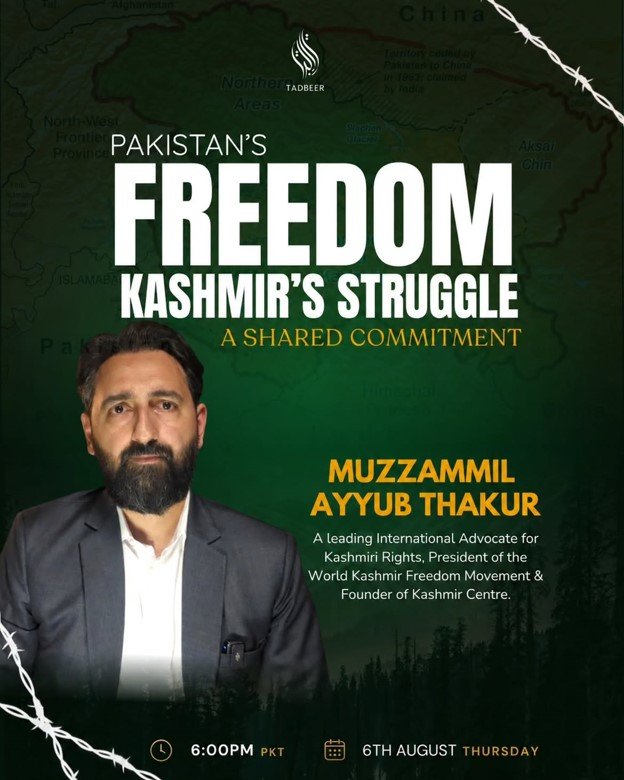
A Conversation with Muzzammil Ayyub Thakur
Kashmir remains one of South Asia’s longest-running and most consequential political disputes, shaped by decades of conflict, competing territorial claims, questions of rights and representation, and an unresolved debate over self-determination.
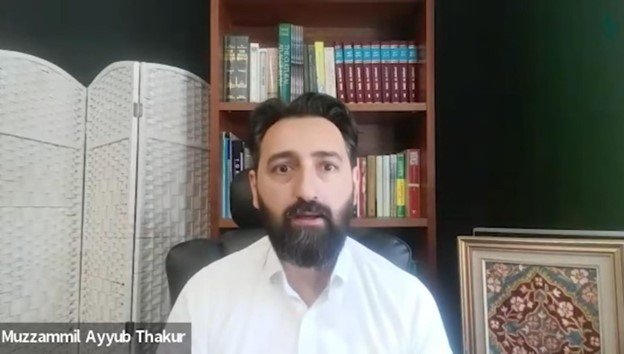
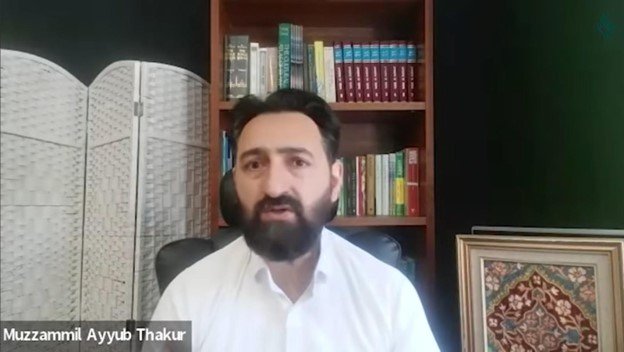
Through “Pakistan and Kashmir: A Shared Commitment to Freedom,” TADBEER Institute brought together a focused conversation with Muzzammil Ayyub Thakur to examine the Kashmir issue beyond daily headlines. The discussion explored its historical foundations, humanitarian dimensions, political complexities, international relevance, and the role Pakistan has played in advocating its position on Kashmir.
The session also provided an opportunity to understand the perspective of Kashmir advocacy groups and to examine why Kashmir continues to feature in regional diplomacy and international forums.
“Understanding Kashmir requires looking beyond the headlines—to its history, its people, and the competing political claims that continue to shape its future.”
The Kashmir Freedom Movement
A central part of the conversation focused on the evolution of the Kashmir movement and the historical developments that have shaped it over several decades.
Muzzammil Ayyub Thakur discussed the movement through the lens of Kashmiri political aspirations, identity, and demands for self-determination. The conversation examined how different generations of Kashmiris have experienced and understood the dispute, as well as how political developments in the region have influenced its trajectory.
Rather than viewing Kashmir only as a territorial disagreement between India and Pakistan, the session highlighted the importance of understanding the perspectives and experiences of Kashmiris themselves.
Human Rights and Self-Determination
The discussion also addressed human rights and self-determination, two issues that remain central to international debate surrounding Jammu and Kashmir.
The session explored concerns raised by Kashmir advocates regarding civil liberties, political participation, security measures, and restrictions in the region, alongside the wider question of how competing interpretations of self-determination have shaped political discourse.
Attention was also given to the humanitarian consequences of a dispute that has persisted across generations and why the experiences of ordinary people remain an essential part of any serious conversation about Kashmir.
Pakistan, Kashmir and Regional Politics
Pakistan’s relationship with Kashmir formed another major theme of the discussion. The conversation examined Islamabad’s longstanding diplomatic and political support for the Kashmiri right to self-determination, its position on relevant UN resolutions, and the place of Kashmir within Pakistan’s foreign-policy discourse.
The session also considered the broader geopolitical dimension: India-Pakistan relations, regional security, diplomacy, and the international community’s engagement with Kashmir.
These competing political and legal positions demonstrate why Kashmir remains not only a bilateral dispute but also an issue with wider implications for peace and stability in South Asia.
Keeping Kashmir in the Global Conversation
The discussion concluded by examining the role of advocacy, research, public awareness, diaspora engagement, and international institutions in keeping attention focused on Kashmir.
For TADBEER Institute, conversations such as this provide a platform to examine difficult regional questions in greater depth, hear directly from advocates and experts, and encourage audiences to engage critically with the historical, political, legal, and humanitarian dimensions of major issues.
“Pakistan and Kashmir: A Shared Commitment to Freedom” was ultimately a conversation about history, identity, rights, diplomacy, and the aspirations of people whose future remains at the centre of one of South Asia’s most enduring disputes.
Image Gallery:
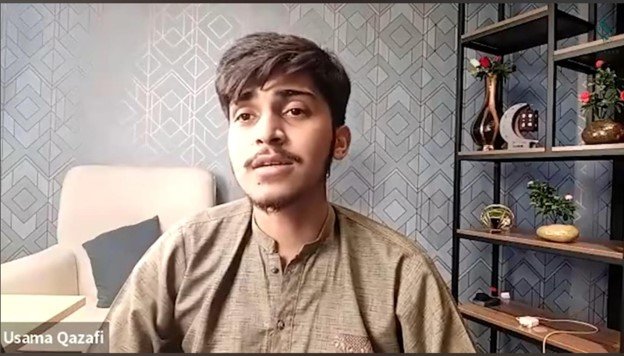
Reel:
Looking Ahead
The Kashmir dispute continues to shape regional politics, India-Pakistan relations, human rights debates, and conversations surrounding self-determination. Understanding it requires sustained engagement with its history, competing political and legal positions, and most importantly, the experiences and aspirations of the people affected by the conflict.
Through this session with Muzzammil Ayyub Thakur, TADBEER Institute sought to create space for a deeper discussion on the Kashmir movement, Pakistan’s position, human rights concerns, advocacy, and the continuing international relevance of the dispute.
We extend our appreciation to our guest, participants, audience, and team members who contributed to this conversation.
Follow TADBEER Institute for upcoming discussions, research initiatives, seminars, and conversations on Pakistan, South Asia, geopolitics, society, and emerging regional challenges.
Event Details
• Session: Pakistan and Kashmir: A Shared Commitment to Freedom
• Guest: Muzzammil Ayyub Thakur
• Date: 6 August, 2026
• Focus Areas: Kashmir, Self-Determination, Human Rights, Pakistan-Kashmir Relations, Jammu & Kashmir, Advocacy & Regional Politics
• Organizer: TADBEER Institute